Arsenic Filter
Safe water where arsenic contamination is a real risk
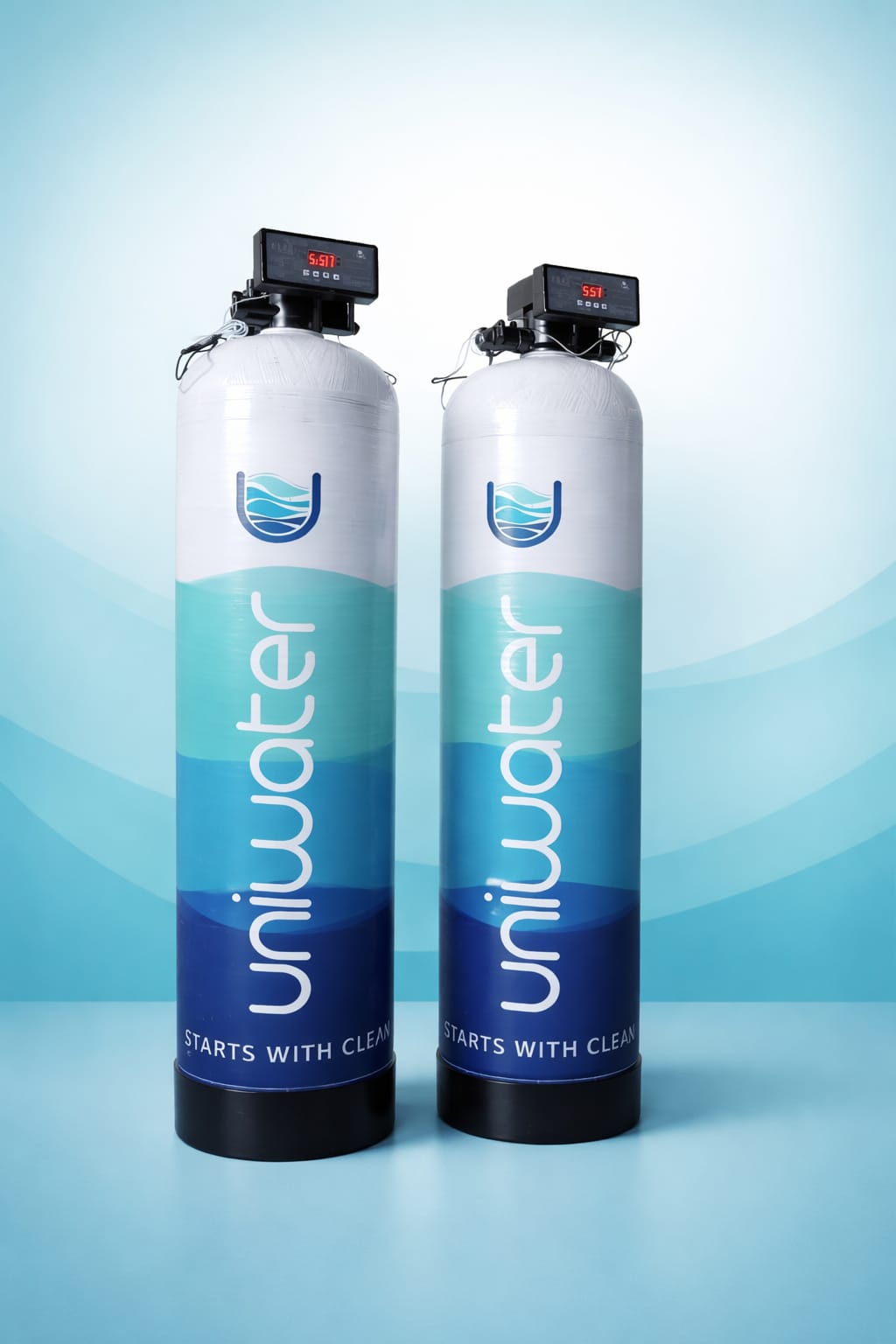
Arsenic contamination in groundwater is a documented public health issue in several Indian states — notably West Bengal, Jharkhand, Bihar, parts of Uttar Pradesh, Assam, and pockets of Rajasthan and Punjab. UNIWATER's Arsenic Filter uses proven adsorption-based media (granular ferric hydroxide or activated alumina) to reduce arsenic levels to below the BIS drinking water standard of 10 ppb. The system is designed for use at the point of entry or point of use depending on arsenic levels and application.
Signs you may need this system
How it works
Adsorption-Based Removal
Granular ferric hydroxide (GFH) or activated alumina media with high arsenic adsorption capacity, proven in field deployments
Brings Water Below BIS Limit
Designed to reduce arsenic to below 10 ppb (BIS 10500 standard) from typical contaminated groundwater levels
Iron-Arsenic Co-Treatment
Correctly sequenced with iron removal where both contaminants are present — improper sequence reduces arsenic removal efficiency
Test-Confirmed Sizing
Media volume and exchange capacity calculated from actual arsenic concentration — not generic sizing
Media Replacement Schedule
Media is replaced on schedule based on treated volume and influent concentration — UNIWATER manages this schedule
Problems it solves
- Arsenic contamination in borewell or groundwater supply
- Water from areas with known geogenic arsenic occurrence
- Risk of long-term arsenic-related health impacts from drinking water
- High arsenic in municipal tanker supply in affected regions
- Regulatory compliance for commercial water supply in arsenic-affected zones
Where it's used
- Residential homes in arsenic-affected groundwater zones
- Schools and community water supply in affected regions
- Industrial premises using groundwater in arsenic-risk areas
- Water supply systems requiring arsenic removal for compliance
- Rural drinking water points requiring affordable, maintainable treatment
The UNIWATER approach
UNIWATER's arsenic filter recommendation is always based on a confirmed water test result — arsenic is invisible, tasteless, and odourless, and cannot be detected without testing. We assess iron levels alongside arsenic (as the two often co-occur and iron interferes with arsenic removal), determine the correct media type and capacity, and design a system appropriately sized for your application.
Frequently asked questions
Related solutions
Remove sand, sediment, and visible particles at the source
UNIWATER's Practical Particle Filter is a high-performance sediment pre-filter d...
Eliminate rust, staining, and iron damage at the source
Iron contamination is one of the most damaging and visible water problems in Ind...
Clean, safe drinking water — tailored to your source and needs
A whole-house water softener or filter treats your plumbing and appliances — but...